
When your child is diagnosed with cerebral palsy (CP), it’s natural to feel overwhelmed. Among the many medical terms you may come across, one that often stands out is GMFCS — and understanding this can offer clarity during an otherwise uncertain time.
The Gross Motor Function Classification System (GMFCS) is a tool used by paediatric therapists, doctors, and rehabilitation teams to categorize how a child with CP moves. It doesn’t diagnose the condition, nor does it define your child’s potential — but it does give a snapshot of how independently they can use their body to sit, walk, or move around.
The system is divided into five levels, ranging from Level I (mildest) to Level V (most severe). These levels reflect your child’s current gross motor abilities, not future possibilities.
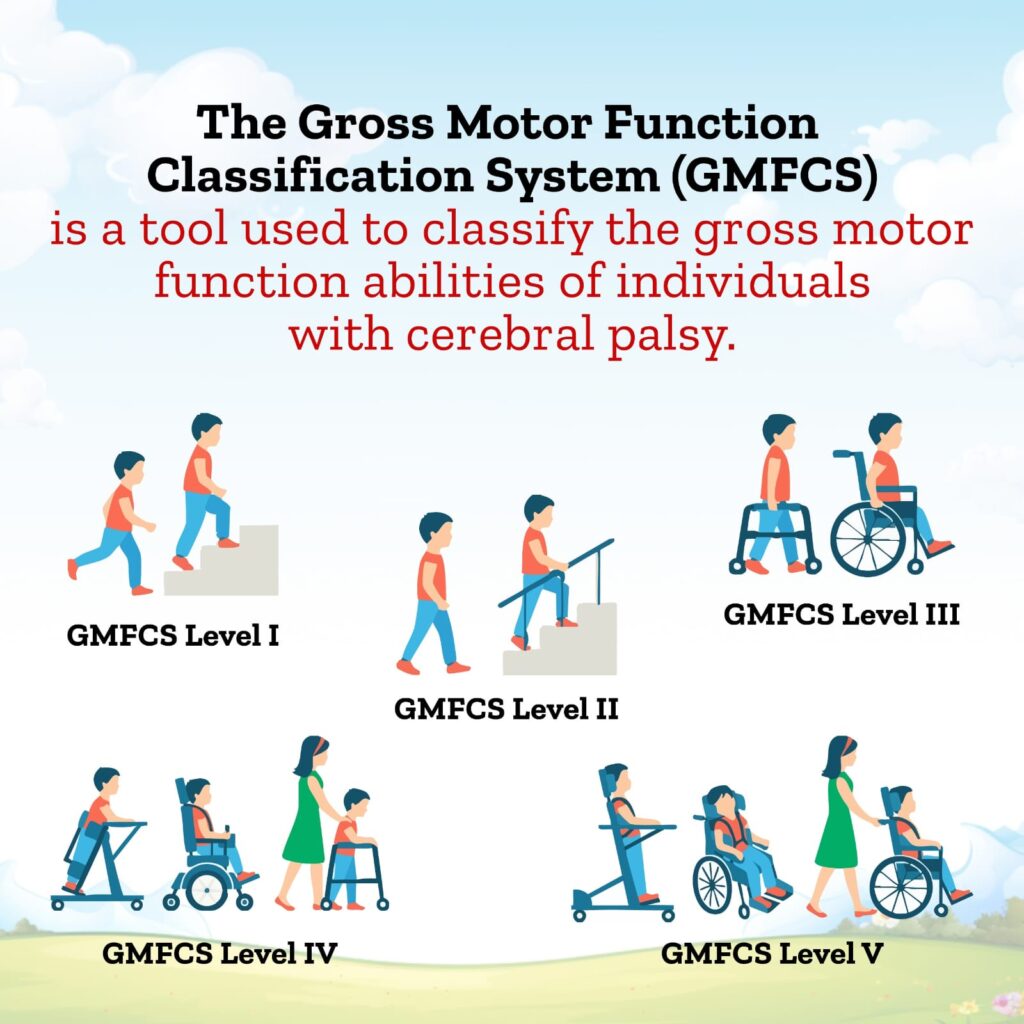
- Level I: Children can walk and climb stairs independently but may struggle with speed, balance, or coordination. They participate in physical activities, just a bit differently.
- Level II: Children walk in most settings but may need help with uneven ground, long distances, or crowded areas.
- Level III: Walking with a walker or crutches is possible, but wheelchairs may be used for longer distances.
- Level IV: Mobility is very limited. Children often need powered mobility devices or physical support.
- Level V: Movement is dependent on caregivers. Children require full physical assistance for sitting, standing, and mobility.
As a parent, hearing “GMFCS Level III” or “Level V” can feel daunting. But it’s essential to remember — this is not a measure of your child’s intelligence, happiness, or quality of life. It’s a guide, not a prediction.
With the right physiotherapy, support systems, and unwavering parental love, progress is always possible — regardless of the level. GMFCS helps us set realistic goals, monitor improvements, and plan the most effective therapies tailored to your child.
If your child has been given a GMFCS level, take it as a starting point. Be curious, ask questions, and lean on your physiotherapy team. Your child’s journey is unique — and with the right understanding and support, it can be truly empowering.