
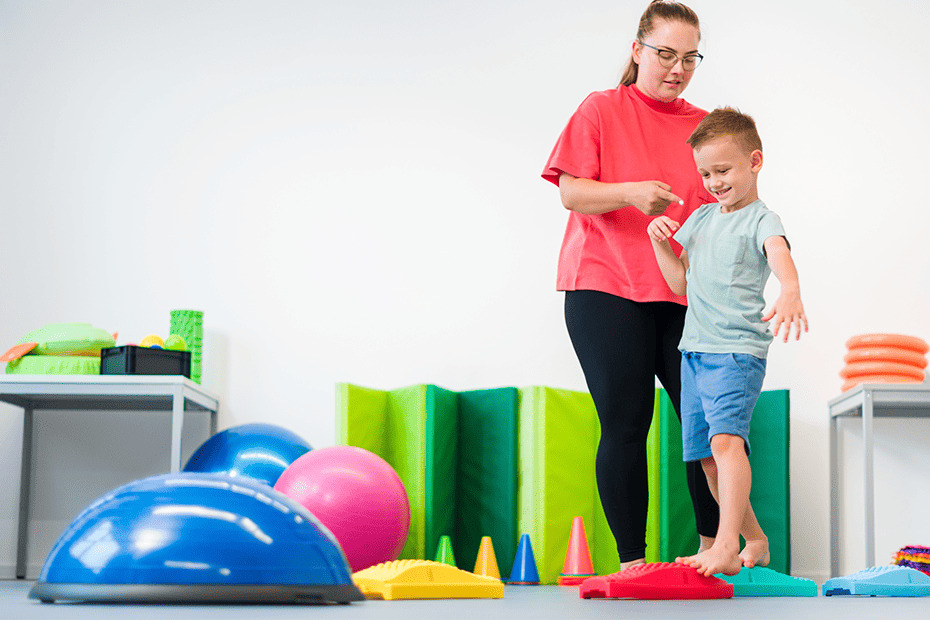
Parent: Doctor, I’ve been worried about my son. His feet seem to protrude outwards when he walks, and he often stumbles. Is this something serious?
Physiotherapist: I understand your concern. Some children do develop unique walking patterns as they grow. But when a child’s feet consistently turn outwards, or if it affects their balance and daily activities, it could be a sign that they need extra support through physiotherapy.
Parent: So, physiotherapy isn’t just for injuries? It can help children too?
Physiotherapist: Absolutely. Paediatric physiotherapy helps children improve movement, posture, and coordination. It’s not about labeling your child—it’s about giving them the right tools to grow and thrive.
Every parent dreams of watching their child grow with joy—taking first steps, running freely, playing without limits. But sometimes, small worries creep in. A child avoids crawling, struggles to balance, or falls more often than others. Parents may brush these off as “just a phase,” but sometimes, these are gentle signs that a child might need physiotherapy.
Understanding Physiotherapy for Children
Physiotherapy is not only for adults recovering from injuries. For children, it plays a vital role in supporting movement, posture, and motor skill development. It helps when certain physical challenges prevent a child from reaching age-appropriate milestones.
Unlike what many believe, seeking physiotherapy for children is not about labeling them—it’s about giving them the tools to thrive.
Signs Parents Shouldn’t Ignore
Children grow at different paces, but some difficulties may point toward the need for extra support. Watch for these signs:
- Delayed milestones: Not sitting by 8 months, not walking by 18 months.
- Poor coordination or frequent falls: Struggling to balance, climb, or run smoothly.
- Stiff or floppy muscles: Unusual tightness or looseness in arms and legs.
- Uneven movement: Favoring one side of the body more than the other.
- Difficulty with everyday activities: Trouble holding objects, playing, or keeping up with peers.
- Pain or fatigue: Complaints of body aches after simple activities.
While not every delay means a serious problem, these signs should encourage parents to explore whether physiotherapy can help.
Why Early Support Matters
Early attention can make all the difference. When started at the right time, paediatric physiotherapy:
- Improves strength, flexibility, and balance
- Enhances gross and fine motor skills
- Prevents long-term complications like poor posture or joint stiffness
- Builds confidence, independence, and participation in daily activities
It is not about rushing milestones—it’s about making each step less of a struggle and more of a joy.
A Parent’s Role in Healing Parents are the first to notice subtle differences in their child’s growth. Trusting those instincts is powerful. If something feels “off,” it’s worth seeking guidance. Because sometimes, a little support at the right moment can change a child’s future in the most beautiful way.